


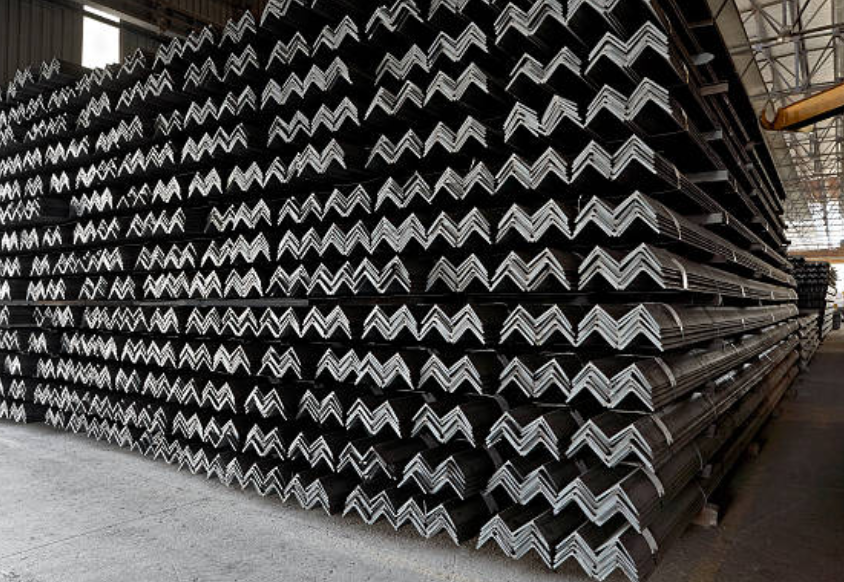
Steel angle iron is one of the most widely used structural steel products in construction, manufacturing, infrastructure, and industrial fabrication. Its simple L-shaped cross-section provides an efficient combination of strength, stability, versatility, and ease of connection.
From steel buildings and industrial platforms to transmission towers, equipment frames, supports, and bracing systems, angle steel can perform both structural and non-structural functions. It can be cut, drilled, bolted, welded, galvanized, or painted according to the requirements of a specific project.
But what is angle iron, how is it manufactured, and what determines angle iron strength? This guide explains the principal characteristics, advantages, and applications of steel angle iron in modern construction.
What Is Angle Iron?
Angle iron is a steel section with two legs positioned at approximately 90 degrees, creating an L-shaped cross-section. Despite the traditional name “angle iron,” most structural angle products used today are manufactured from steel.
The product is therefore also commonly known as:
-
Steel angle
-
Angle steel
-
Angle bar
-
L-angle
-
L-section
-
Structural angle
-
Steel angle iron
Steel angles are generally divided into two principal types:
Equal Angle Steel
Equal angle steel has two legs of the same width. A designation such as 50 × 50 × 5 mm describes an angle with two 50 mm legs and a nominal thickness of 5 mm.
Equal angles are commonly used for bracing, frames, supports, towers, trusses, platforms, and general fabrication.
Unequal Angle Steel
Unequal angle steel has one leg wider than the other. For example, a 100 × 75 × 8 mm angle has one 100 mm leg, one 75 mm leg, and a nominal thickness of 8 mm.
Unequal angles are useful when the connection geometry, load direction, available space, or structural design requires different leg dimensions.
The correct size and type must be selected according to the design loads, unsupported length, connection arrangement, steel grade, corrosion exposure, and applicable engineering standard.
What Is an Angle Iron Made From?
Structural angle iron is normally made from carbon steel or low-alloy structural steel. Common material grades include:
-
Q235B
-
Q355B
-
S235JR
-
S275JR
-
S355JR
-
ASTM A36
-
ASTM A572 Grade 50
Different steel grades provide different yield strengths, chemical compositions, weldability, toughness, and suitability for structural applications. The required grade should therefore be confirmed from the engineering drawings and project specifications before production.
For overseas projects, the material should be supplied with appropriate mill test certificates so that the heat number, chemical composition, mechanical properties, dimensions, and applicable manufacturing standard can be verified.
How Is Steel Angle Iron Manufactured?
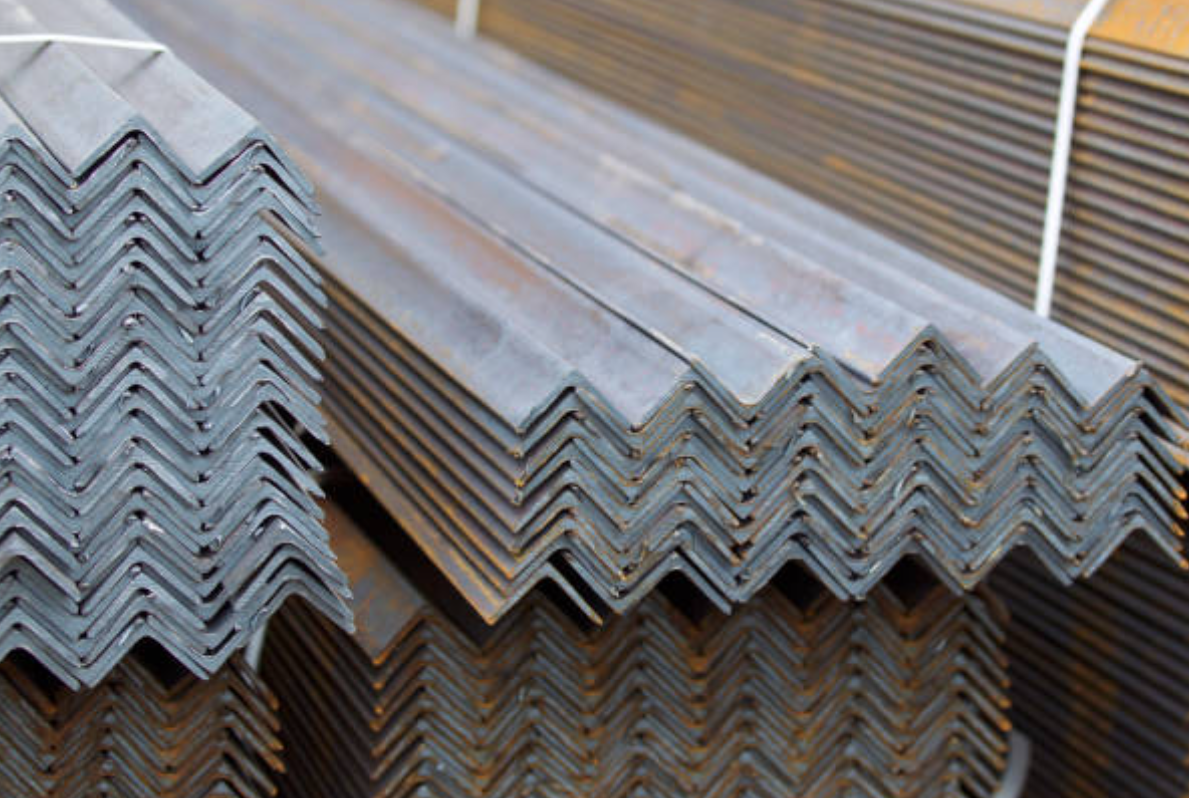
Most structural steel angle iron is manufactured by hot rolling. In this process, heated steel billets pass through a series of forming rolls until the required L-shaped section and dimensions are produced.
Hot-rolled angles are widely used in structural construction because they are available in standardized sizes, thicknesses, lengths, and steel grades.
Cold-formed angles can also be produced from steel sheet or strip through bending or roll-forming processes. They are generally lighter and may be used for secondary framing, enclosures, supports, and other applications where the design does not require a heavier hot-rolled structural section.
Special angle sections can also be fabricated from steel plate when a project requires unusual dimensions that are not readily available as standard rolled sections. However, the welding procedure, dimensional tolerances, inspection requirements, and structural performance must be evaluated carefully.
After forming or rolling, angle steel may undergo additional processing, including:
-
Cutting to specified lengths
-
Hole drilling or punching
-
Slot production
-
End preparation
-
Welding and assembly
-
Hot-dip galvanizing
-
Abrasive blasting and painting
-
Dimensional and visual inspection
These operations allow standard angle steel to be transformed into finished structural components ready for assembly or site installation.
What Determines Angle Iron Strength?
Angle iron strength cannot be determined by its L-shaped appearance alone. Its structural performance depends on several connected factors:
-
Leg width
-
Section thickness
-
Cross-sectional area
-
Steel grade and yield strength
-
Member length
-
Load direction
-
Connection position
-
Bolt-hole arrangement
-
Weld design
-
Unsupported length
-
Risk of local or overall buckling
-
Corrosion allowance or remaining thickness
Increasing the dimensions or thickness of an angle generally increases its cross-sectional area and resistance. However, a larger angle is not automatically suitable for every structural application.
Because an angle section is not symmetrical about both principal axes, loads applied away from its effective center may create eccentricity, twisting, or combined bending. Slender angle members may also be affected by buckling before the steel reaches its full material strength.
For this reason, structural angle steel used in load-bearing construction should be selected and verified by qualified engineers according to the applicable design standard. Product size alone should not be treated as proof of safe load capacity.
Benefits of Steel Angle Iron
1. Efficient Strength-to-Weight Performance
The L-shaped cross-section allows steel angles to provide useful stiffness and resistance without requiring a solid rectangular section. This makes angle steel suitable for many structural applications where strength, weight, and material efficiency must be balanced.
2. Versatile Construction Applications
Angle iron construction can be found in small fabricated brackets as well as large industrial and infrastructure projects.
Typical applications include:
-
Steel building bracing
-
Roof trusses
-
Transmission towers
-
Telecommunication towers
-
Equipment frames
-
Industrial platforms
-
Walkways and stair structures
-
Racks and shelving systems
-
Pipe and mechanical supports
-
Conveyor structures
-
Solar mounting systems
-
Fencing and safety barriers
-
Trailer and machinery frames
-
Connection cleats and brackets
The same basic steel section can perform very different functions depending on its size, orientation, connection, and structural design.
3. Easy Cutting, Drilling, Welding, and Bolting
Steel angles are relatively easy to process into finished components. They can be cut to length, drilled for bolted connections, welded into frames, or used as connection members between beams, columns, braces, and secondary steelwork.
Bolted angle connections can simplify transportation and site assembly, while welded angle assemblies can provide factory-controlled fabrication for suitable applications.
The fabrication method should be selected according to structural requirements, erection conditions, transportation limitations, and the applicable welding or bolting standard.
4. Suitable for Structural Bracing
Angle steel is frequently used as diagonal bracing in buildings, towers, platforms, and industrial structures. Properly designed bracing members help transfer horizontal loads and improve the stability of the overall structural system.
However, the performance of an angle brace depends on whether it is designed for tension, compression, or load reversal. Compression members require particular attention to slenderness, effective length, connection eccentricity, and buckling resistance.
5. Multiple Surface-Treatment Options
Steel angle iron can be supplied with different surface treatments according to the service environment:
-
Black or untreated surface
-
Shop primer
-
Epoxy coating
-
Painted finish
-
Hot-dip galvanizing
-
Duplex systems combining galvanizing and paint
Hot-dip galvanized angle steel is commonly selected for towers, solar structures, outdoor supports, fencing, and infrastructure exposed to moisture or atmospheric corrosion.
Galvanizing thickness, surface preparation, coating inspection, venting and drainage details, and repair requirements should be specified according to the relevant project standard.
6. Efficient Transportation and Assembly
Angle sections can often be nested or bundled efficiently, helping reduce packaging volume compared with some larger fabricated assemblies. Components can also be pre-cut and pre-drilled before shipment, allowing faster identification and assembly at the construction site.
For export projects, suitable bundle identification, piece marking, packing lists, moisture protection, and loading plans are important for preventing loss, confusion, and transport damage.
7. Recyclability and Long Service Life
Steel is recyclable, and fabrication offcuts can be collected and returned to the material production cycle. A correctly designed angle steel component can also provide a long service life when its coating system, inspection plan, and maintenance requirements match the actual exposure environment.
Recyclability does not remove the need for responsible material use, but it makes structural steel suitable for projects seeking efficient use and recovery of construction materials.
Angle Iron Construction Applications
Angle iron construction covers much more than simple brackets or light frames. In engineered structures, angle steel may be used as an individual member, a connected pair of angles, a built-up section, or part of a larger truss and bracing system.
Steel Buildings
Angles can be used for roof bracing, wall bracing, equipment supports, connection cleats, door frames, platforms, and secondary structural components.
Transmission and Telecommunication Towers
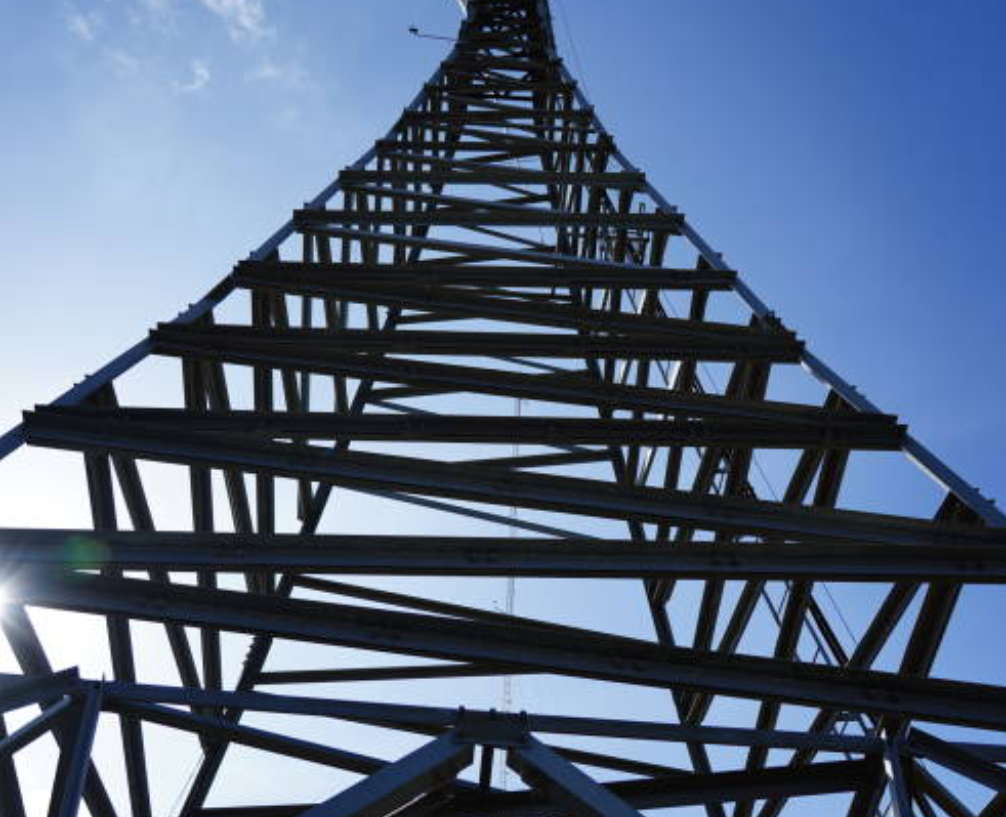
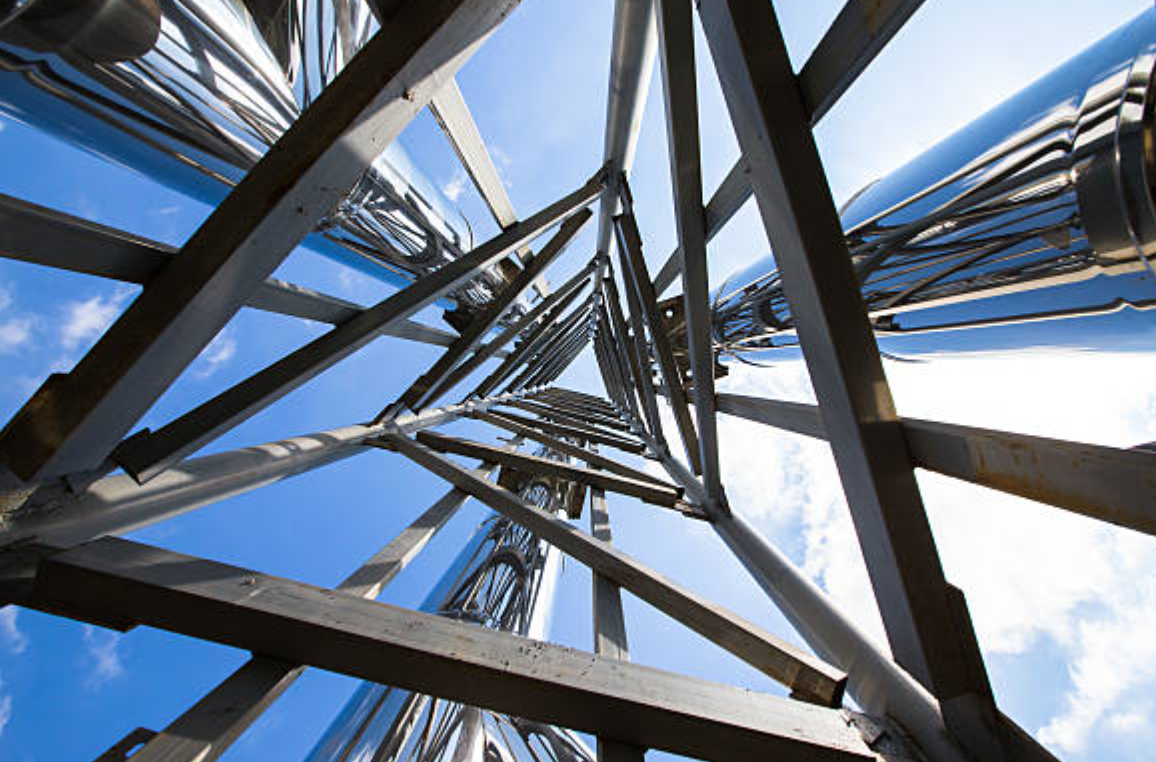
Galvanized angle steel is widely used in lattice towers because individual members can be accurately drilled, bundled for transport, and assembled using high-strength bolts.
Tower projects require careful control of hole position, member length, steel grade, galvanizing quality, trial assembly, and piece marking.
Industrial Platforms and Access Structures
Angle steel can be used in platform frames, stair systems, handrail components, grating supports, maintenance walkways, and equipment-access structures.
Solar and Infrastructure Projects
Depending on the structural design, galvanized angles can be used for solar mounting frames, utility structures, fencing systems, supports, and other outdoor steelwork.
How to Select the Correct Steel Angle Iron
Before ordering angle steel, the purchaser should confirm:
-
Equal or unequal angle
-
Leg dimensions and thickness
-
Required length
-
Steel grade
-
Manufacturing standard
-
Dimensional tolerances
-
Hole sizes and positions
-
Cutting and fabrication requirements
-
Welding or bolting requirements
-
Surface treatment
-
Inspection and documentation
-
Packing and delivery requirements
For structural applications, the section must be selected from engineering calculations rather than appearance or previous experience alone.
Providing drawings, a bill of materials, project location, design standards, loading information, and coating specifications helps the supplier prepare a more accurate technical and commercial proposal.
Why Source Steel Angle Iron From HHY?
HHY Steel Structure supplies steel angle iron and fabricated angle components for steel buildings, towers, industrial structures, platforms, supports, and international construction projects.
Our capabilities include:
-
Supply of equal and unequal angle steel
-
Carbon and structural steel grades
-
Cutting, drilling, welding, and component fabrication
-
Hot-dip galvanizing and protective coating options
-
Dimensional and visual inspection
-
Material certificates and quality documentation
-
Component identification and export packing
-
International shipping coordination
-
Fabrication support based on customer drawings
With steel pipe inventory exceeding 10,000 tons and structural steel inventory exceeding 7,000 tons, HHY can support projects requiring both structural sections and fabricated steel components.
Our production and quality-control teams review the drawings, material specifications, fabrication details, surface-treatment requirements, and documentation before delivery.
Frequently Asked Questions
What is angle iron?
Angle iron is an L-shaped steel section consisting of two legs positioned at approximately 90 degrees. It is commonly used for structural support, bracing, framing, connections, towers, platforms, and general metal fabrication.
What is an angle iron used for?
An angle iron can be used for steel building bracing, connection brackets, roof trusses, towers, equipment frames, platforms, racks, supports, fencing, walkways, and machinery structures.
How do you spell angle iron?
The standard spelling is angle iron—two separate words. In modern structural steel specifications, it may also be called angle steel, steel angle, angle bar, L-angle, or structural angle.
Is steel angle iron strong?
Yes, steel angle iron can provide efficient structural strength when its size, thickness, steel grade, member length, load direction, and connections are correctly designed. Its safe load capacity must be determined through engineering calculations.
What affects angle iron strength?
Angle iron strength is affected by its dimensions, thickness, steel grade, unsupported length, connection arrangement, loading direction, eccentricity, corrosion condition, and susceptibility to local or overall buckling.
Is angle iron suitable for construction?
Yes. Angle iron construction is common in steel buildings, roof trusses, transmission towers, telecommunication towers, platforms, equipment frames, bracing systems, and connection assemblies.
Can angle iron be hot-dip galvanized?
Yes. Hot-dip galvanizing is widely used to protect angle steel installed in outdoor or corrosive environments. The required coating thickness and inspection criteria should be stated in the project specification.
Request a Steel Angle Iron Quotation
If your project requires standard steel angles, galvanized angle steel, tower components, structural bracing, or fabricated angle assemblies, send HHY Steel Structure your drawings or material list.
Please include the dimensions, thickness, steel grade, quantity, length, hole requirements, surface treatment, applicable standard, destination port, and required delivery schedule.
HHY Steel Structure will review the technical requirements and provide a suitable manufacturing and supply proposal.

