


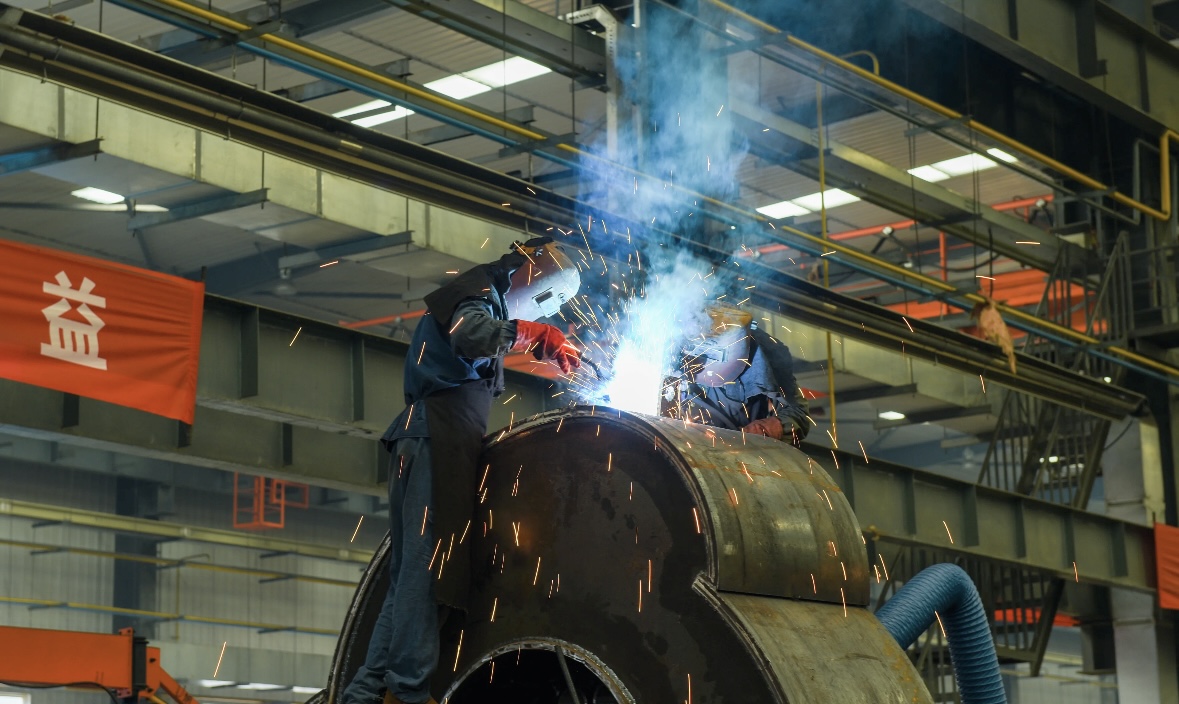
Every steel building depends on its connections.
Beams must connect to columns. Plates must connect to structural members. Trusses, brackets, stiffeners and other components must work together as one structural system.
For many of these connections, structural welding plays an essential role.
But good structural steel welding is about much more than simply joining two pieces of steel. The type of structural weld, welding procedure, fabrication environment, welder experience and inspection process can all affect the quality, efficiency and cost of a steel project.
For warehouses, industrial plants, workshops, commercial buildings and other steel structures, understanding how a welding structure is fabricated can help buyers make better decisions before production begins.
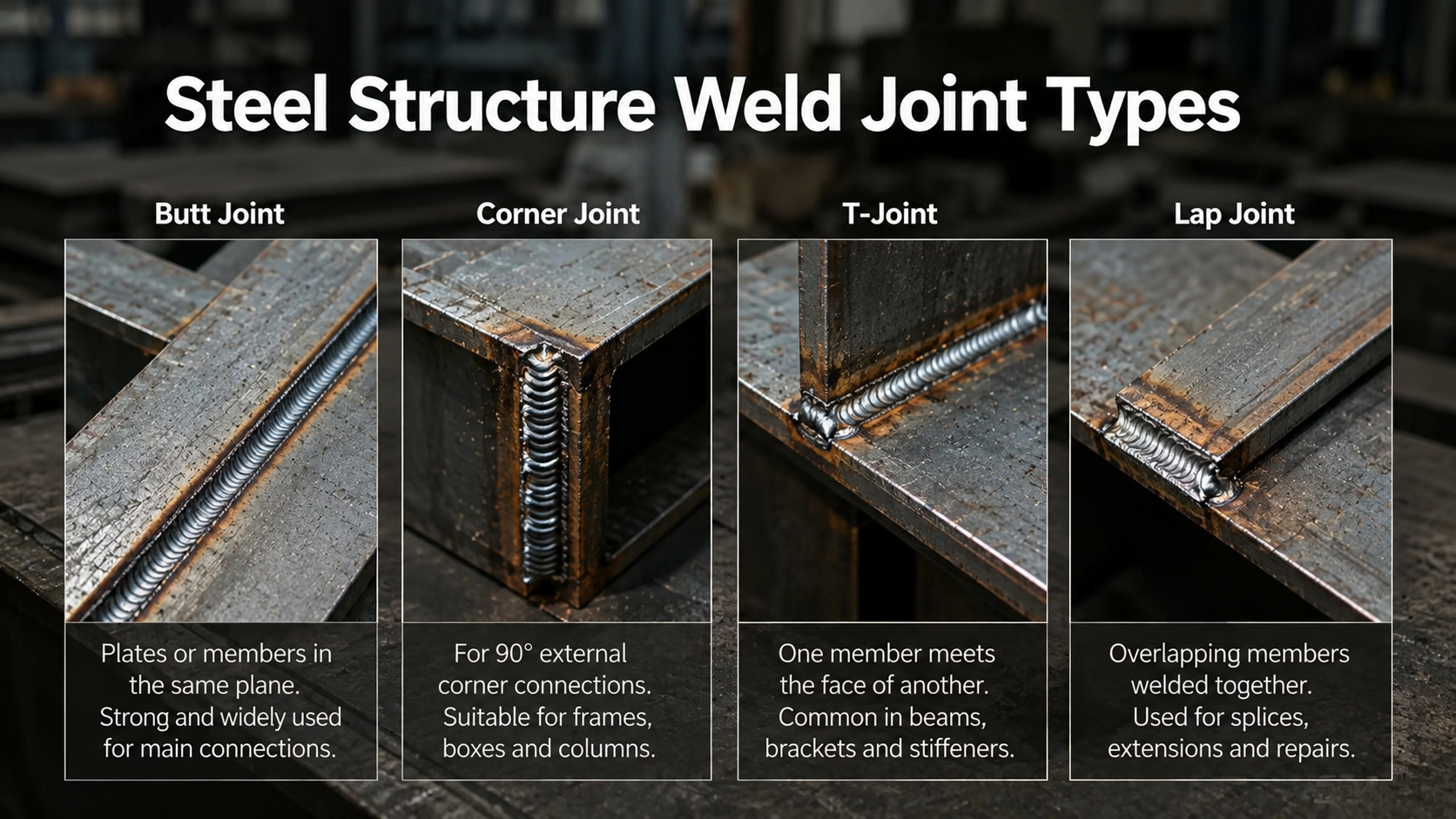
What Is Structural Welding?
Structural welding is the process of joining load-bearing or supporting steel components by creating a permanent welded connection between them.
It is commonly used for steel beams, columns, trusses, base plates, connection plates, stiffeners, brackets and custom fabricated components.
Unlike a mechanical connection that relies entirely on bolts and fasteners, a structural weld creates a continuous connection between steel parts.
However, the purpose of structural welding is not simply to create the largest possible weld.
A properly designed connection should provide the required strength while controlling welding volume, fabrication time, distortion and production cost. In many steel projects, an efficient connection design can use a combination of welding and bolting rather than relying entirely on one method.
That is why structural welding should be considered during both engineering and fabrication.
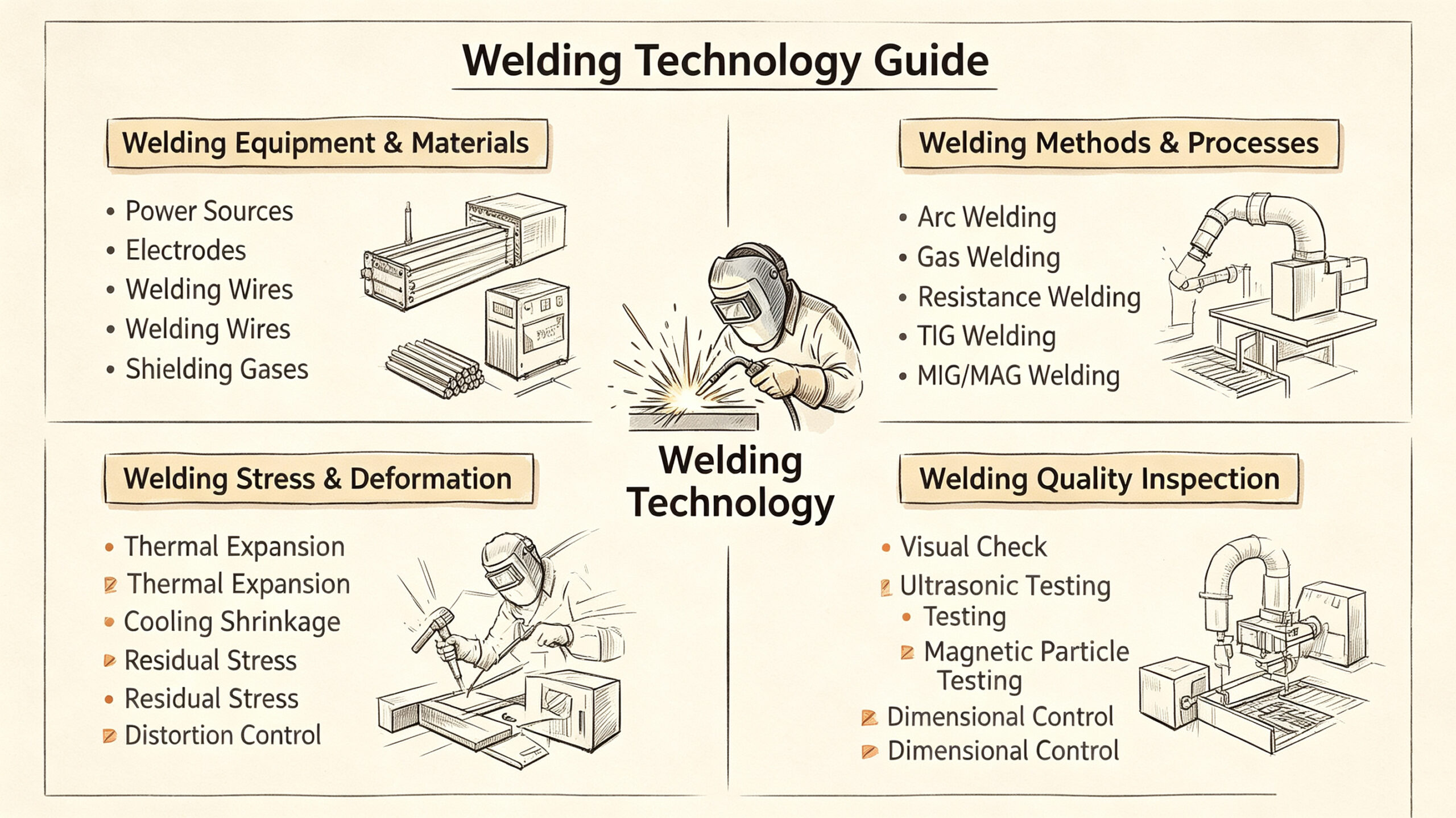
What Is a Structural Welder?
A structural welder is a skilled worker who performs welding on structural steel components according to approved drawings, welding requirements and project specifications.
The work is very different from simply joining ordinary metal parts.
A structural steel welder may work on H beams, box columns, trusses, heavy steel plates, connection assemblies and other components th
How Is a Welding Structure Fabricated?
A successful welding structure begins long before welding starts.
The first stage is engineering.
Fabrication drawings define the dimensions of beams, columns and plates as well as the position and type of each connection. Connection details determine where structural welds are required and where bolted connections may be more practical.
The steel is then cut, drilled and prepared according to the drawings.
Before welding, the parts must be correctly positioned and assembled. Fit-up is important because inaccurate positioning can affect both weld quality and the final dimensions of the component.
The structural welder then completes the required welds according to the fabrication requirements.
After welding, the component is checked for dimensional accuracy and weld quality before moving to later fabrication processes such as shot blasting, painting, galvanizing or other surface treatment.
This is why welded structures should be viewed as engineered products rather than simply pieces of steel that have been welded together.
Common Methods for Welding Structural Steel
Different fabrication conditions require different welding processes.
In structural steel fabrication, processes such as Shielded Metal Arc Welding, Gas Metal Arc Welding, Flux-Cored Arc Welding and Submerged Arc Welding may be selected depending on the component, material thickness, welding position and production requirements.
For large fabricated beams and heavy plate components, automated or semi-automated welding can improve production consistency and efficiency.
For complex connections or areas that cannot easily be reached by automated equipment, manual or semi-automatic welding may be more suitable.
There is therefore no single welding method that is automatically best for every project.
The correct approach to welding structural steel depends on the connection design, steel thickness, welding position, production quantity and quality requirements.
What Makes Structural Welds Reliable?
The appearance of a weld alone does not determine whether it is a good structural connection.
Reliable structural welds begin with good engineering details.
The joint should be designed so that welders can actually access the welding area. Steel plates should be prepared correctly. Weld sizes should match the design instead of being made unnecessarily large.
Production control is equally important.
Correct fit-up helps maintain dimensional accuracy. Suitable welding sequences help control deformation. Appropriate welding procedures help maintain consistent quality between different components.
Inspection is then used to verify that the finished structural weld meets the project requirements.
Depending on the project and connection, inspection may include visual examination as well as additional testing methods specified by the applicable engineering requirements.
The objective is not simply to produce more welding.
It is to produce the right structural weld in the right location with consistent quality.
Structural Welding vs Bolting
One of the most common questions in steel construction is whether welding or bolting should be used.
The better question is:
Which connection method is more suitable for this particular part of the project?
Structural welding can create compact and permanent connections without requiring large numbers of bolts or external connection components. It is especially useful for fabricated beams, box sections, trusses, stiffeners and custom steel assemblies.
Bolted connections, on the other hand, can make transportation and site erection much easier.
This is particularly important for large steel buildings.
A complete building frame cannot normally be transported as one welded structure. Instead, major beams, columns and trusses are fabricated in manageable sections and transported to the construction site.
A common solution is therefore to complete precision structural steel welding inside the fabrication factory and use bolted connections for major site assembly.
This combination can provide the advantages of both systems.
Factory welding provides controlled fabrication conditions, while site bolting can make erection faster and reduce the amount of welding required at height.
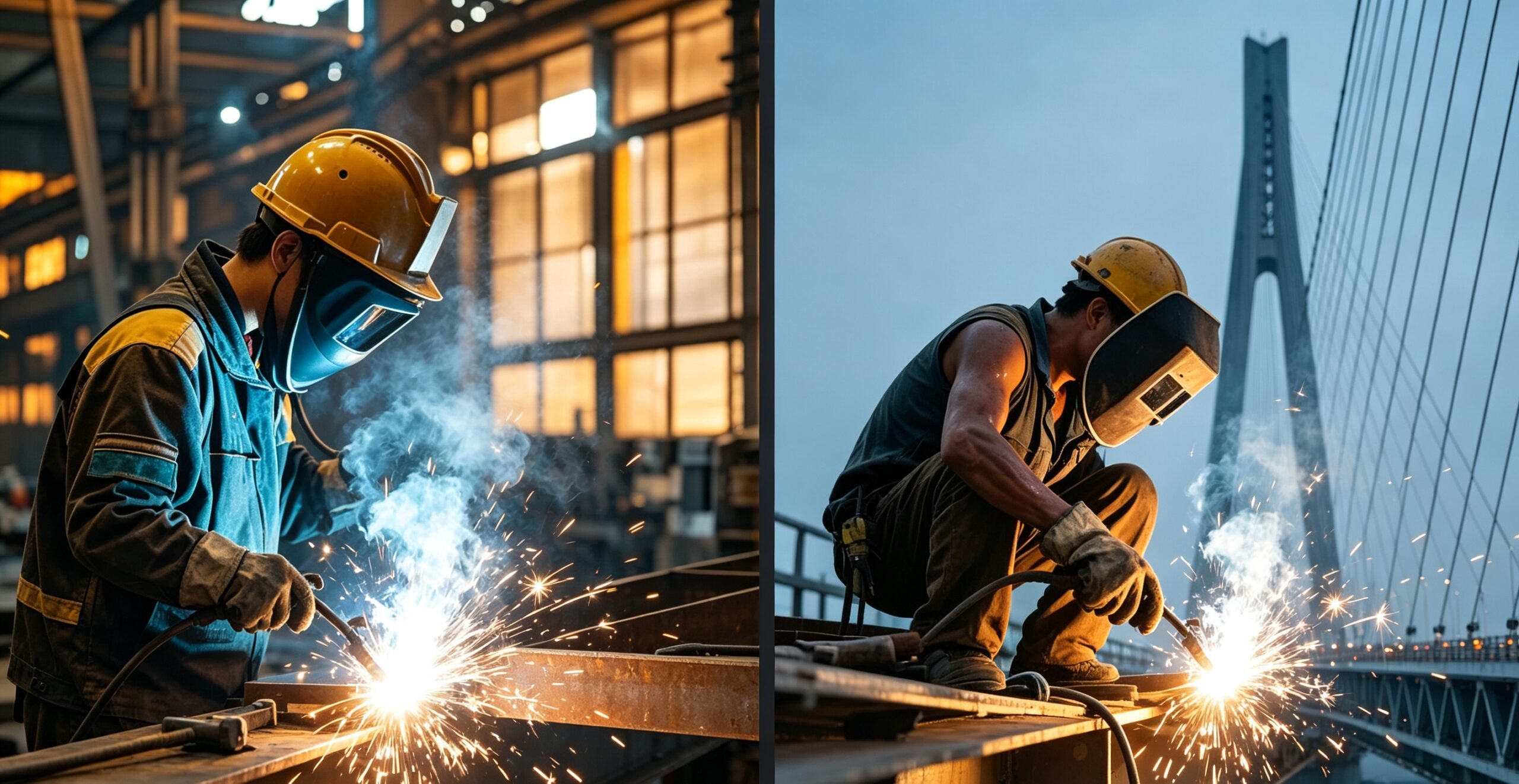
Factory Welding or Site Welding?
Where welding takes place can be almost as important as how it is performed.
Factory structural welding provides a more controlled production environment.
Components can be positioned using fabrication equipment, welding operations can be organized into a planned production sequence, and completed components can be inspected before surface treatment and shipment.
Site welding may still be necessary for certain projects, but conditions can be more difficult to control.
Weather, working height, site access, surrounding construction activities and available equipment can all influence site productivity.
For prefabricated steel buildings, maximizing factory fabrication and reducing unnecessary site welding can therefore improve overall constructability.
This does not mean eliminating site welding completely.
It means deciding during engineering which structural welds should be completed in the factory and which connections should be completed during erection.
Where Are Welded Structures Commonly Used?
Welded structures are found throughout modern steel construction.
Industrial buildings use welded beams, columns, trusses and equipment support structures. Warehouses use fabricated portal frames and connection components. Manufacturing plants may require heavy welded assemblies for production equipment or large-span structural systems.
Structural welding is also widely used in customized components where standard rolled sections alone cannot provide the required geometry.
Examples include built-up H sections, tapered beams, box columns, plate girders, heavy brackets and special connection assemblies.
In these applications, structural steel welding allows individual plates and sections to become a larger engineered component.
Structural Welding Is Also a Cost Decision
More welding does not always mean a better steel structure.
Every additional structural weld requires preparation, welding material, welder time and inspection.
Complex welding details can also slow production.
For example, reducing the weight of a steel beam may appear to save material, but if the lighter design requires many additional stiffeners and complicated welded connections, fabrication cost may increase.
A slightly simpler structural member may sometimes reduce the total number of structural welds and lower overall manufacturing time.
This is why HHY approaches structural steel fabrication as an engineering and manufacturing process rather than evaluating cost only by steel weight.
Connection design, welding volume, production efficiency and erection requirements should be considered together.
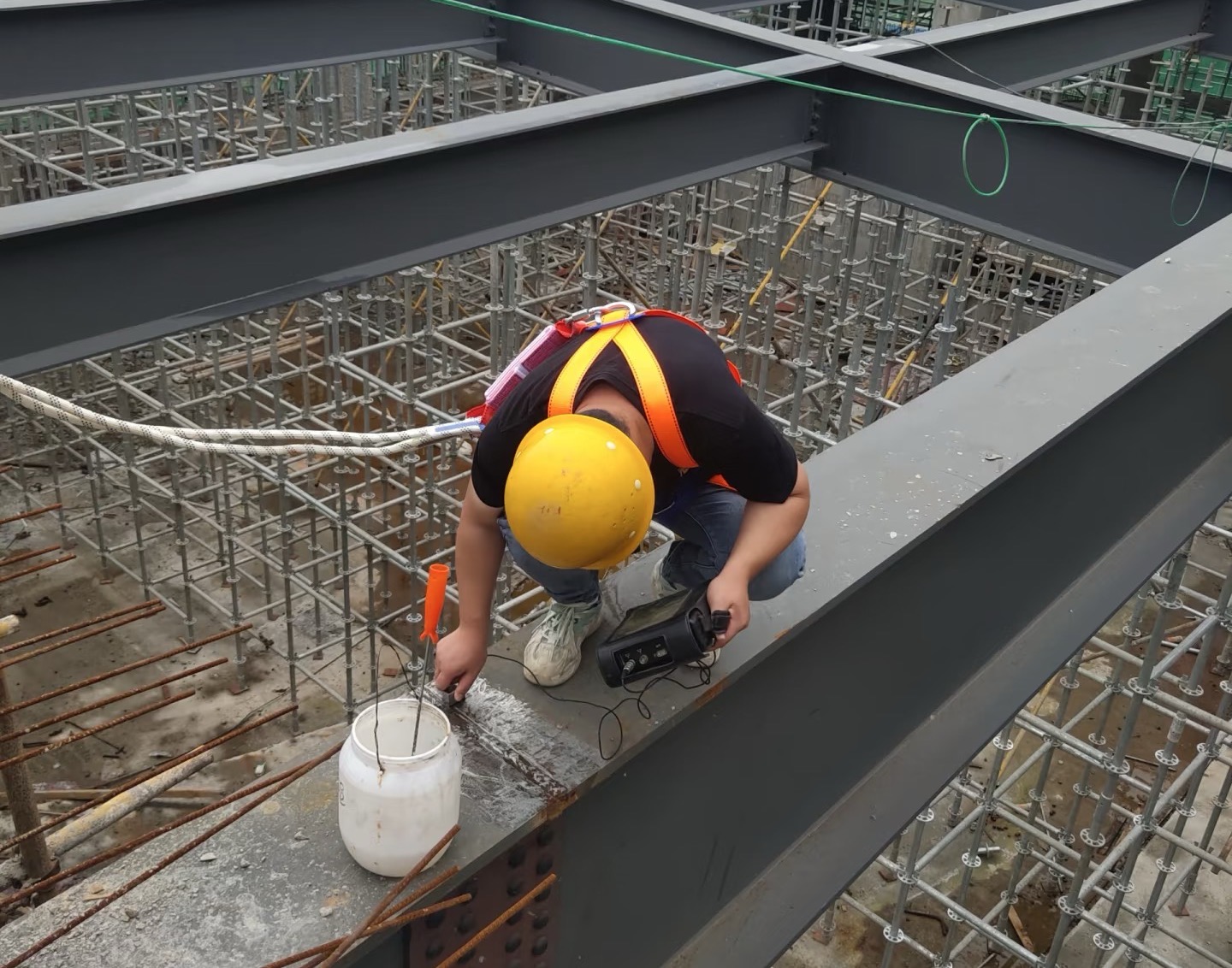
Quality Control in Structural Steel Welding
Quality control should continue throughout the fabrication process.
Before welding, materials, dimensions and connection preparation must be checked.
During production, welders follow the applicable welding requirements while supervisors control fit-up, sequence and dimensional accuracy.
After welding, the finished components are inspected before moving to surface treatment and final preparation.
This integrated process becomes increasingly important as components become larger or more complex.
Large steel structures contain hundreds or even thousands of individual connections. Consistency across those connections matters just as much as the quality of one individual weld.
For international projects, fabrication documentation and communication between the engineering team, factory and customer are also important parts of quality control.
Choosing the Right Structural Welding Supplier
Selecting a supplier for a welded steel structure should involve more than comparing the price per ton.
A capable supplier should understand engineering drawings, structural connections, fabrication tolerances, welding requirements, production planning and surface treatment.
It should also be able to consider what happens after fabrication.
Can the components be transported efficiently?
Can they be assembled easily on site?
Are the connection locations practical for installers?
Could a difficult welded connection be redesigned into a simpler fabrication detail?
These questions can significantly affect the final project cost and construction schedule.
Structural Welding Solutions from HHY Steel Structure
HHY Steel Structure provides structural steel and plate fabrication for industrial, commercial and warehouse projects, together with customized steel structure solutions. The company also integrates structural fabrication with other project requirements such as surface treatment and project delivery.
Our approach to structural welding focuses on the complete fabrication process rather than welding as an isolated operation.
From fabricated beams and columns to trusses, connection plates and customized heavy steel components, each welding structure must match the engineering drawings while remaining practical for production, transportation and installation.
For overseas projects, this coordination becomes particularly important.
A good steel structure should not only be strong on the drawing.
It should also be practical to manufacture, economical to ship and efficient to assemble.
Frequently Asked Questions About Structural Welding
Is structural welding stronger than bolting?
Neither method is automatically stronger in every situation.
Both welded and bolted connections can be designed to carry substantial structural loads. The appropriate connection depends on engineering requirements, force transfer, fabrication conditions and erection strategy.
For many steel buildings, factory welding combined with site bolting provides an efficient solution.
What does a structural steel welder do?
A structural steel welder joins beams, columns, plates, trusses and other steel components according to fabrication drawings and welding requirements.
The work can include joint preparation, fit-up, welding and cooperation with the inspection and production teams.
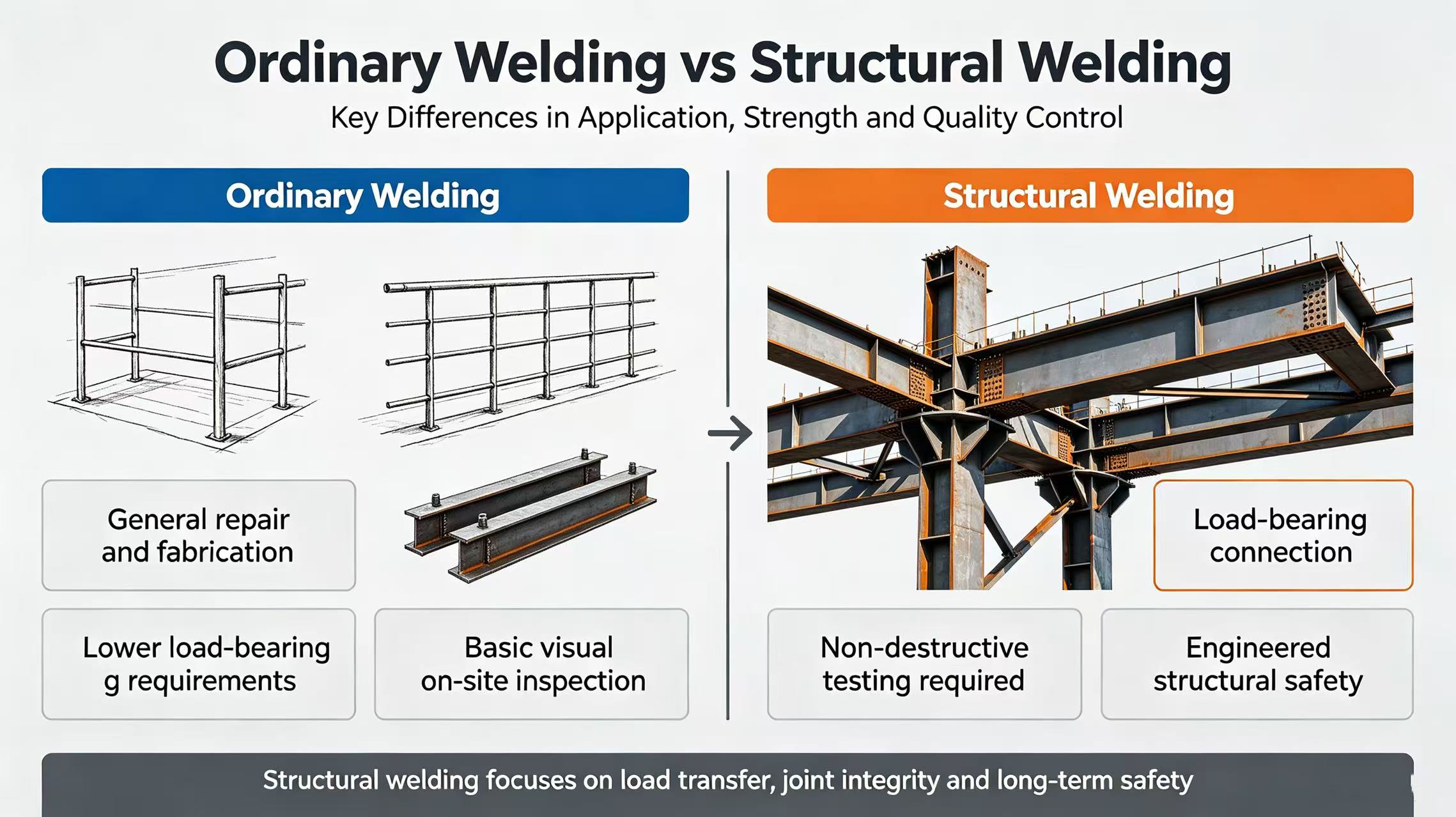
What is the difference between ordinary welding and structural welding?
Ordinary welding may be used simply to connect metal components.
Structural welding involves connections that form part of a structural system and therefore requires greater attention to design requirements, weld geometry, procedures, workmanship and inspection.
Can large welded structures be shipped internationally?
Yes, but transportation should be considered during design.
Large welded structures are often divided into transportable modules or individual steel components. Factory welding is completed where appropriate, while selected connections are designed for site assembly.
Why are both welding and bolting used in steel buildings?
Because they solve different problems.
Structural welding is highly effective for manufacturing individual steel components and permanent assemblies. Bolting is often more practical for connecting those components during site erection.
Using both allows engineers and fabricators to balance structural performance, fabrication efficiency, transportation and installation.
Build Better Welded Structures from the Connection Up
A successful steel project is not defined by how much welding it contains.
It is defined by whether every connection performs the job it was designed to do.
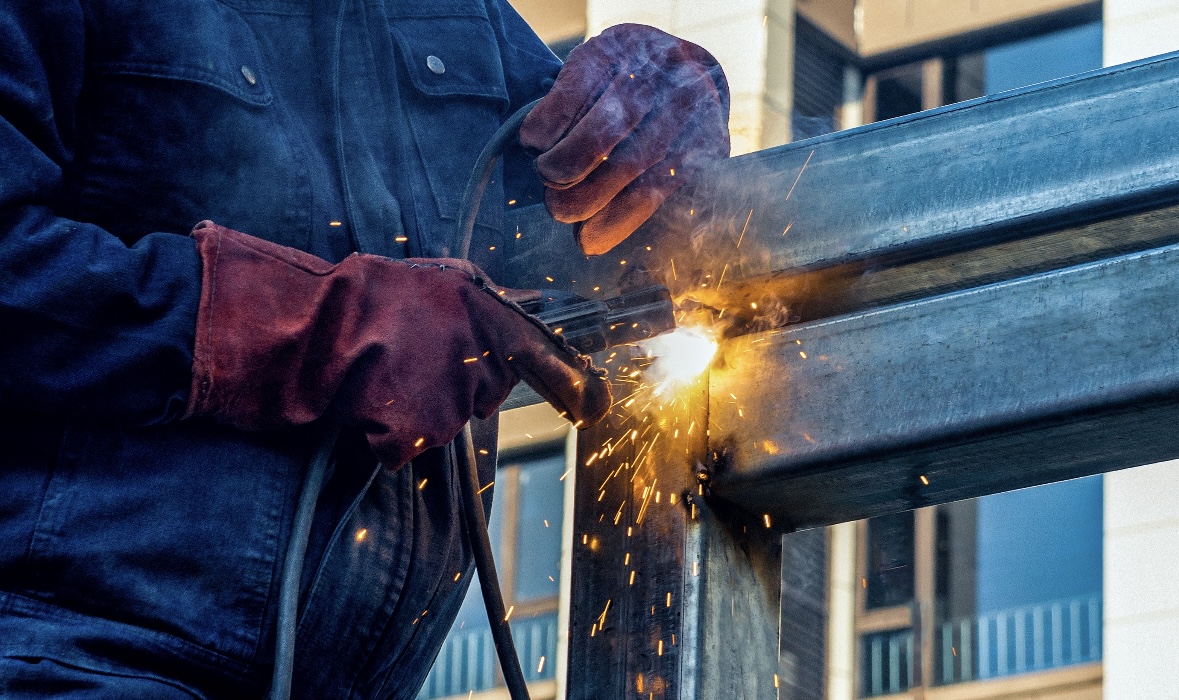
Talk to HHY Steel Structure about your drawings, connection requirements and fabrication structural welding combines engineering, skilled structural welders, suitable fabrication equipment, controlled production and effective inspection.
When those elements work together, welded steel components can be manufactured accurately, transported efficiently and assembled into reliable steel structures.
If you are planning an industrial building, warehouse, workshop or customized steel project, HHY Steel Structure can support your project from structural fabrication and welding structural steel to surface treatment and project delivery.plan, and let us help turn your design into a practical welded steel structure.

