


Understanding Steel Beam Types, Sizes, and Structural Applications
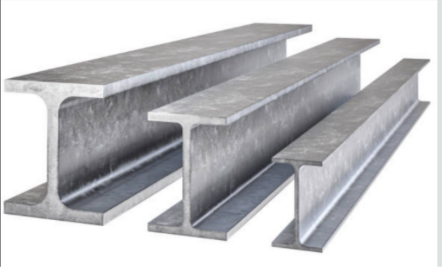
Steel beams are one of the most essential components in modern construction. Whether used in industrial buildings, warehouses, bridges, or steel roof systems, steel beam types such as h beam, w beam, and s beam form the backbone of structural framing systems. These beams steel members are designed to resist bending and shear while maintaining stability under heavy loads.
At HHY Steel Structure (HHYSTEEL), we supply and fabricate a wide range of structural beam products, including steel h beams, wide flange beam sections, and american standard beam profiles. This article explains how these beam types are defined, how they differ in geometry and performance, and how to select the right beam for your project.
What Is a Structural Steel Beam?
In structural engineering, a beam is a horizontal or inclined member supported at two or more points. Beams are selected primarily for their ability to resist bending rather than buckling, making them critical in beam structural systems.
Common applications include:
-
Industrial buildings and warehouses
-
Steel roof beams and framing systems
-
Bridge and infrastructure projects
-
Construction metal beams and heavy structural frames
Understanding steel beam sizes, structural steel sizes, and structural steel dimensions is essential for correct beam selection.
How Are Steel Beams Named? (I Steel Beam Shapes)
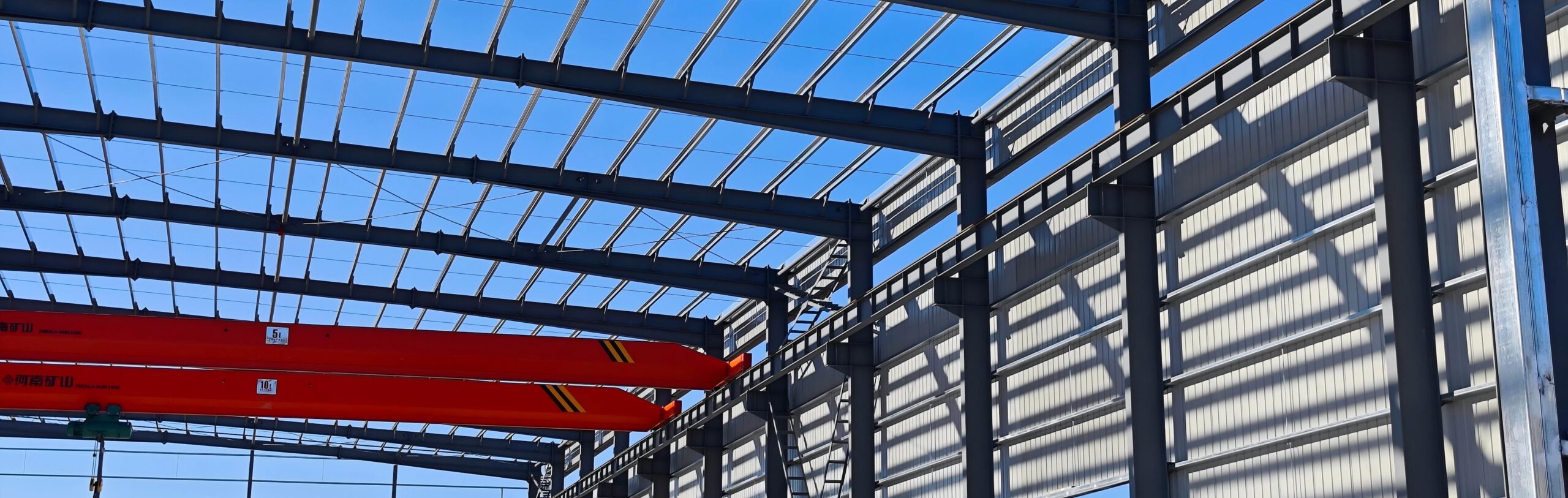
Most steel beams share the same basic cross-sectional components:
-
web of i beam / web of a beam / web of beam – the vertical plate resisting shear
-
flange of a beam / flange of an i beam / flange of i beam – the horizontal plates resisting bending
Together, these form the familiar i beam web flange configuration. The relationship between web and flange, often discussed as web vs flange or flange vs web, determines the beam’s structural behavior.
In American standards, beam naming reflects geometry:
-
s beam / s beams / s shape beam → Standard beams
-
w beam / w-beam / w beams / wbeam → Wide flange beams
-
h beam / h beams / hp beam / hp shape steel → Heavy or bearing pile sections
Tapered vs Parallel Flanges: A Key Structural Difference
One of the most important distinctions among s beam, w beam, and h beam lies in flange geometry.
S Beams (Standard Beams)
S beams are characterized by tapered inner flange surfaces. The slope creates rounded transitions between the flange and the web, which affects both strength distribution and connection detailing.
Key characteristics:
-
Tapered flange geometry
-
Smaller size range compared to W beams
-
Common in traditional construction and shipbuilding
Frequently searched terms include s beam dimensions, s beam sizes, s shaped beam, and american standard beam.
W Beams (Wide Flange Beams)
The defining feature of w beams is the wide flange with parallel inner and outer flange surfaces. This geometry simplifies fabrication and bolted or welded connections.
Advantages of W beams:
-
Parallel flanges improve connection accuracy
-
Large range of w section and w shape beam sizes
-
Widely used in modern construction worldwide
Typical searches include what is w beam, what is a w beam, what is wide flange beam, wide flange beam vs i beam, and i beam vs w beam.
Common profiles include w12x50, w12x19, w10 beam sizes, w18 beam sizes, w14x43, w14x68 dimensions, and w12x26 beam.
H Beams and HP Shapes
H beams are heavier sections with flange widths approximately equal to beam depth. In many engineering contexts, hp beam or hp shape steel refers to H-shaped sections used as bearing piles or load-carrying columns.
Characteristics:
-
Thick web and flange
-
High load-bearing capacity
-
Suitable for foundations and heavy structural support
Common queries include steel h beams, h beam steel, steel h beam dimensions, dimension of h beam, steel h beams sizes, and h column.
Comparison of Steel Beam Types
| Beam Type | Common Keywords | Flange Shape | Typical Use |
|---|---|---|---|
| S Beams | s beam, s-beam, s shape beam | Tapered | Traditional structures |
| W Beams | w beam, w-beam, wide flange | Parallel | Modern buildings & frames |
| H / HP | h beam, hp beam | Wide & thick | Foundations, bearing piles |
This comparison is often searched as s beam vs w beam, s beam vs i beam, wide flange beam vs i beam, and types of steel beams.
Parts of a Steel Beam and Structural Behavior
Every beam consists of clearly defined parts of a steel beam:
-
beam web / beam webs – resist shear forces
-
beam flange / flange beam – resist bending moments
Understanding web and flange of beam, web and flange of i beam, and flange and web behavior is critical for correct design and fabrication.
Steel Beam Sizes and Reading Dimensions
Accurate interpretation of beam designations is essential in procurement and fabrication. Engineers and contractors frequently search:
-
how to read steel beam sizes
-
how to read steel beam dimensions
-
steel beam sizes and dimensions
HHYSTEEL supports projects by providing clear documentation for metal beam sizes, structural beam sizes, and steel shape sizes, ensuring compatibility with design drawings and construction requirements.
What H Beams, W Beams, and S Beams Have in Common
Despite their differences, h beam, w beam, and s beam share the same structural purpose:
-
All are steel beam types
-
All rely on the interaction of web flange geometry
-
All are used across construction, infrastructure, and industrial projects
Choosing the right beam depends on load requirements, connection design, availability, and construction method—not on the name alone.
Conclusion
Understanding the differences between h beam, w beam, and s beam allows engineers, contractors, and developers to select the most efficient structural solution. From wide flange beam systems to hp beam foundations, correct beam selection improves safety, constructability, and cost control.
HHY Steel Structure provides reliable support for steel beam construction, including steel roof beams, structural steel dimensions, and customized fabrication for international projects.
If you are evaluating types of beams in construction or comparing different types of beams, our technical team can assist with selection, sizing, and fabrication coordination.

