


Introduction
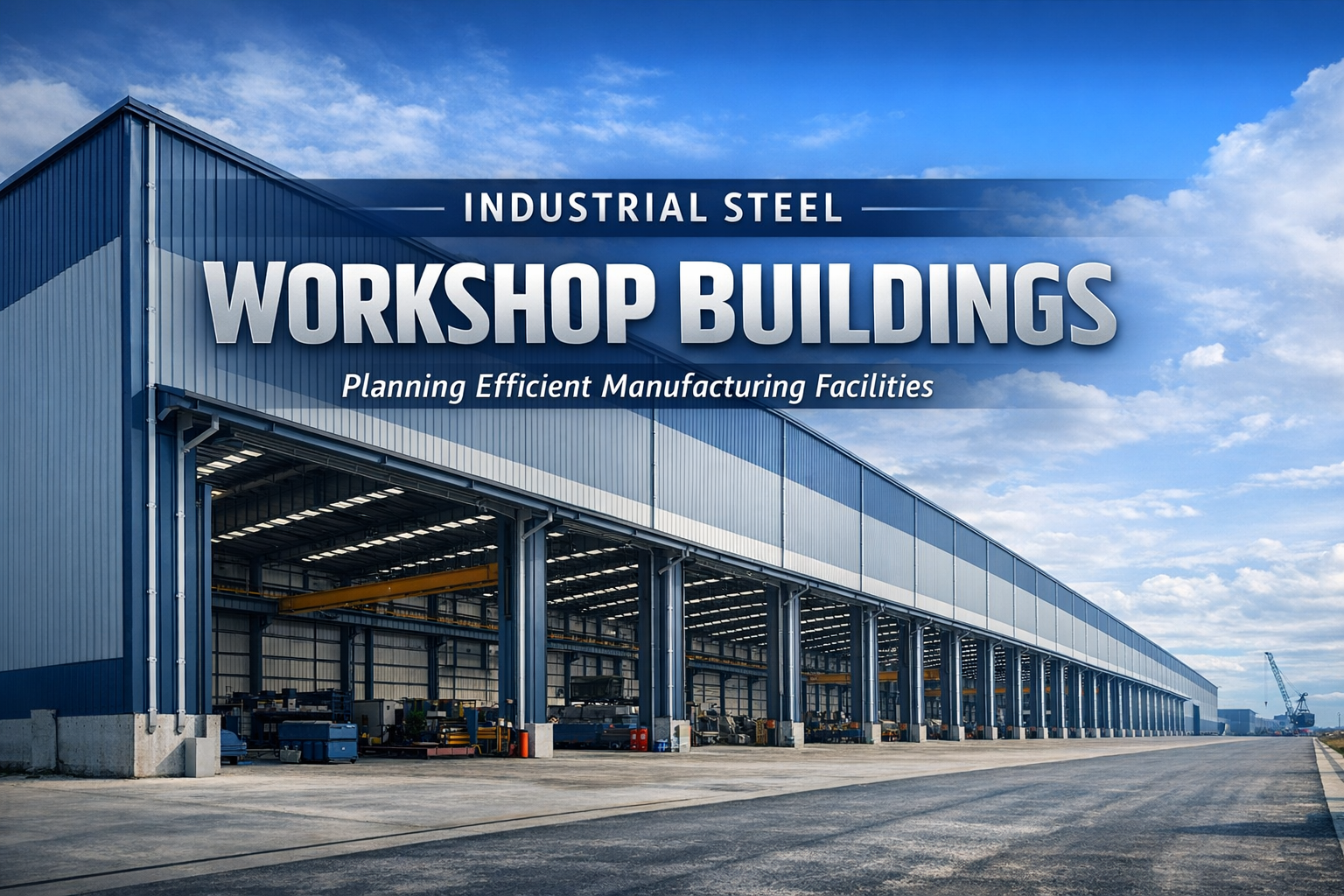
Industrial production demands buildings that are structurally robust, operationally efficient, and adaptable to evolving manufacturing needs. A well-designed industrial steel workshop building provides the necessary structural integrity to support heavy machinery while offering flexible, open interior spaces ideal for production lines, material handling, and future expansion.
Steel structures have become a preferred solution for industrial facilities worldwide. Compared to traditional reinforced concrete buildings, steel workshop buildings offer faster construction timelines, larger column-free areas, and greater flexibility for structural modifications. These advantages make them particularly suitable for manufacturing plants, equipment fabrication workshops, and industrial processing facilities.
When planning a modern industrial workshop, careful consideration must be given to structural design, equipment layout, and logistics flow to ensure optimal long-term operational performance.
Structural Design Considerations for Industrial Workshops
Structural System Selection
Industrial workshops commonly utilize portal frame steel structures, which enable wide spans and efficient load distribution.
A portal frame system consists of steel columns and beams connected through rigid joints to form a stable structural framework. This configuration allows for large, uninterrupted interior spaces without the need for intermediate columns.
Key benefits of this structural system include:
-
Spacious, column-free working areas
-
Flexible equipment layout and reconfiguration
-
Reduced overall structural weight
-
Optimized material utilization
Depending on production requirements, workshop spans typically range from 18 to 36 meters.
Interior Space Planning
Efficient internal layout is critical to industrial productivity. Production equipment, workstations, and material storage zones should be arranged to minimize unnecessary movement and streamline workflow.
Industrial workshops generally incorporate the following functional areas:
-
Production line zones
-
Equipment installation areas
-
Raw material storage
-
Finished product storage
-
Maintenance and repair sections
Proper zoning enhances both operational efficiency and workplace safety.
Building Height Requirements
Workshop height is determined by the type of machinery and production equipment used.
Typical industrial workshop heights range from 8 to 15 meters. Taller structures may be required for facilities utilizing overhead cranes or tall manufacturing equipment.
Sufficient vertical clearance also promotes better air circulation and natural lighting within the workspace.
Door Systems and Transportation Access
Industrial workshops must accommodate convenient entry for trucks, forklifts, and material handling equipment.
Large access doors are typically installed to support efficient logistics operations.
Standard industrial door dimensions include:
| Application | Door Width |
|---|---|
| Forklift entry | 3–4 m |
| Medium truck entry | 4–5 m |
| Heavy truck entry | 6–8 m |
Sliding steel doors or roller shutter doors are commonly specified for their durability and ease of operation.
Foundation and Floor Systems
Industrial steel workshop buildings require robust foundations capable of supporting heavy structural and equipment loads.
Typical foundation systems include:
-
Reinforced concrete pad foundations
-
Anchor bolt systems securing steel columns to foundations
-
Heavy-duty reinforced concrete floor slabs
Industrial floors are engineered for high load-bearing capacity to accommodate machinery, material handling equipment, and continuous heavy traffic.
Structural Materials and Durability
Structural steel is widely adopted in industrial workshop construction due to its superior strength and durability. Steel components are prefabricated to precise specifications and assembled on-site, ensuring structural accuracy and efficient installation.
To enhance durability and corrosion resistance, steel structures are often treated with protective coatings such as:
-
Anti-corrosion paint systems
-
Hot-dip galvanizing
-
Industrial-grade protective finishes
These treatments help preserve structural integrity in demanding industrial environments over extended service periods.
Advantages of Steel Structure Workshops
Industrial steel workshop buildings offer numerous practical benefits.
Efficient Construction Process0
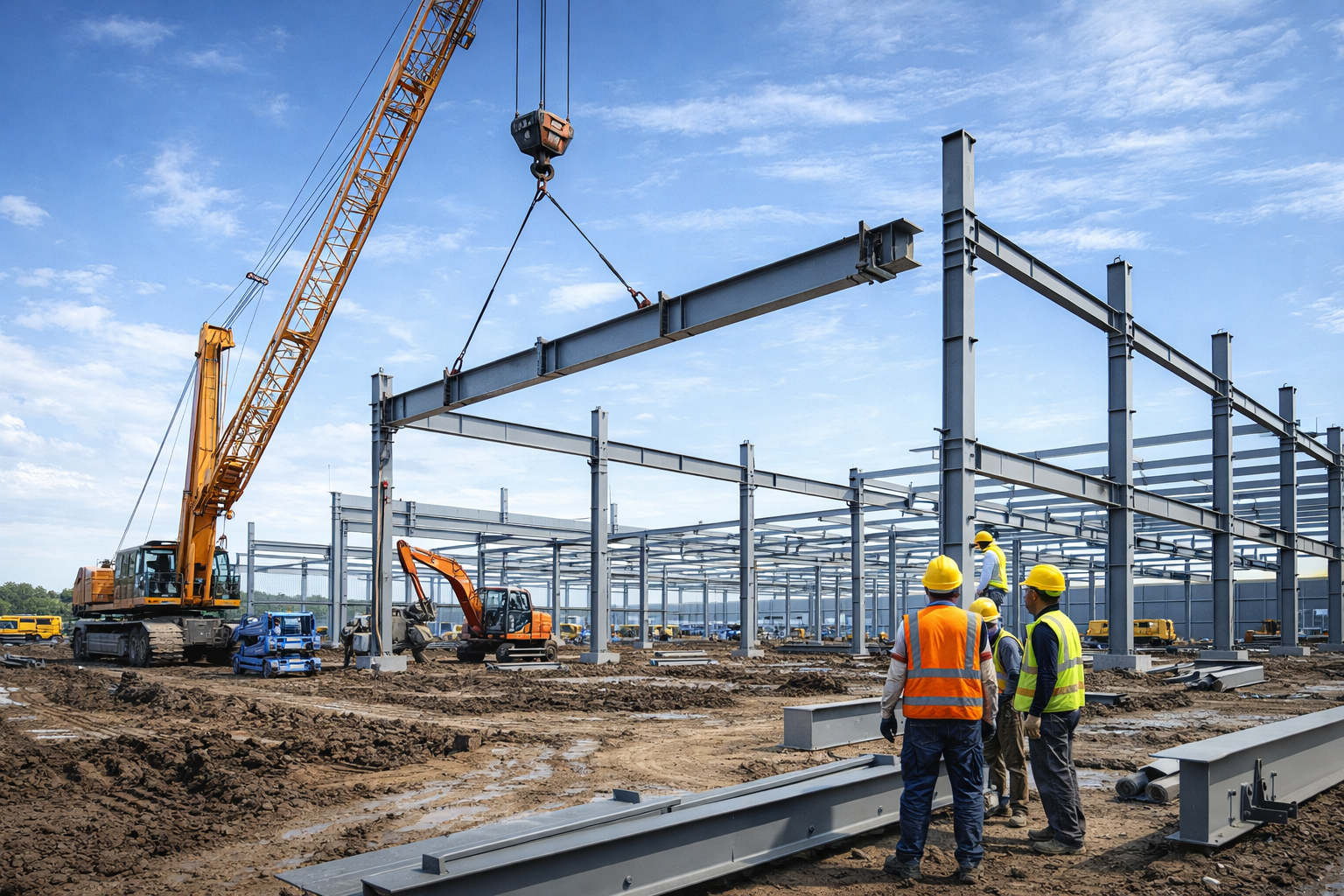
Steel structures are typically fabricated off-site under controlled conditions before being transported for assembly. This prefabrication approach improves quality control and significantly reduces on-site construction time.
Flexible Structural Design
Steel construction allows for adaptable building layouts. Interior spaces can be reconfigured to meet changing production requirements without major structural alterations.
Structural Strength and Stability
Steel offers an exceptional strength-to-weight ratio, enabling it to support substantial loads while maintaining efficient structural performance.
Long-Term Service Life
With appropriate design and protective treatments, steel workshop buildings can remain functional for decades with minimal maintenance.
Applications of Industrial Steel Workshops
Industrial steel workshop buildings serve a broad spectrum of industries.
Typical applications include:
-
Machinery manufacturing facilities
-
Metal fabrication workshops
-
Industrial processing plants
-
Equipment assembly facilities
-
Logistics and warehousing buildings
-
Automotive production plants
Their versatility makes them suitable for both light and heavy industrial operations.
Why Industrial Companies Choose Steel Workshop Buildings
Modern industrial enterprises increasingly prefer steel structures because they combine structural performance with construction efficiency.
Steel workshop buildings enable businesses to:
-
Construct large-scale industrial facilities efficiently
-
Establish flexible production environments
-
Expand capacity seamlessly as production demands grow
These attributes make steel structures a practical and sustainable solution for long-term industrial development.
Conclusion
Industrial steel workshop buildings provide reliable, high-performance structural solutions for contemporary manufacturing facilities. Through thoughtful structural design, efficient space planning, and durable construction materials, these buildings support safe, productive industrial operations.
Steel workshop structures deliver the strength, flexibility, and construction efficiency required by modern industries, establishing them as a practical choice for industrial facilities worldwide.

